 By
By When you are hooking up a trailer, safety chains might seem like a small detail. But they are one of the most important backup systems on your trailer.
Safety chains are designed to help keep the trailer connected to the tow vehicle if the coupler ever comes off the hitch ball. They also help prevent the trailer tongue from dropping directly to the road if the main connection fails. That is why every hookup should include a quick safety chain check before you pull away.
Why Safety Chains Matter
A proper trailer connection is more than just dropping the coupler onto the ball and heading down the road. Safety chains are there as a backup connection between the trailer and the tow vehicle.
For bumper pull trailers, safety chains should typically be crossed underneath the trailer tongue. This helps create a cradle under the coupler if the trailer ever comes loose. They should also have enough slack to allow safe turning, but not so much that they drag on the ground.
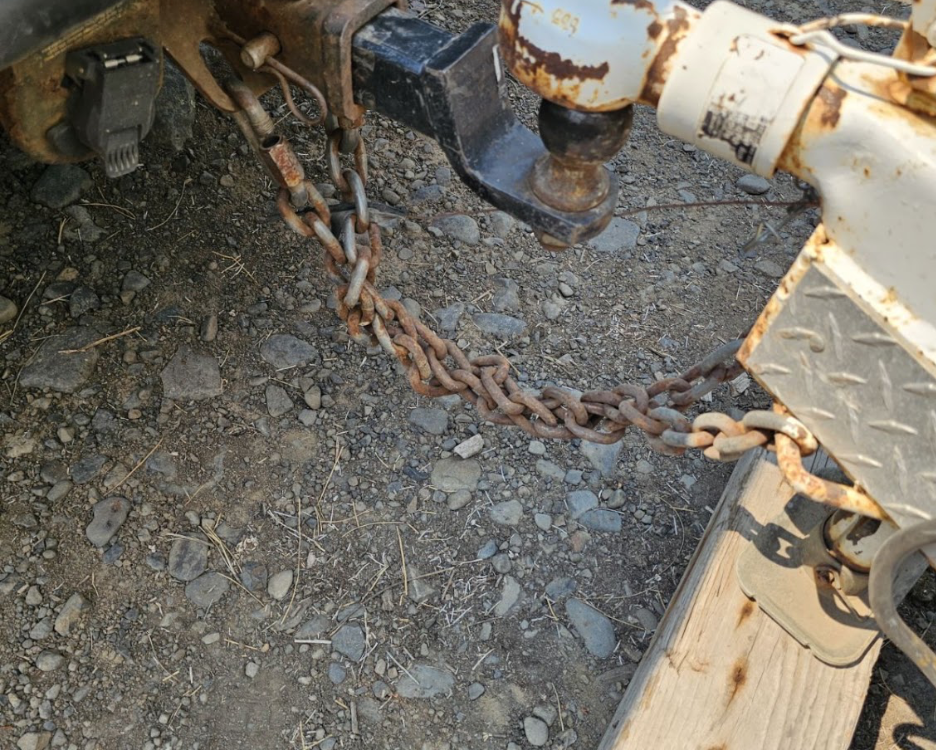
Dragging chains can wear down the links over time, create sparks, and reduce how well the chains can do their job in an emergency. Too much slack can also keep the chains from properly catching the trailer tongue if the coupler disconnects.
The Common Problem: Chains That Are Too Long
Trailer safety chains come in different lengths, and towing vehicles vary in height. A chain length that works well with one truck may hang too low with another.
This is especially common when:
- A trailer is rented or borrowed
- The tow vehicle sits lower than the trailer owner’s vehicle
- A different hitch drop or rise is being used
- The trailer has longer factory-installed chains
- The safety chain attachment points sit low on the receiver
The goal is not to make the chains tight. The goal is to have the right amount of slack: enough for turning, but not enough to drag.

Can You Twist Safety Chains to Shorten Them?
Twisting safety chains is a common real-world solution when there is too much slack. Some trailer users twist the chains a few times to take up extra length and keep them from dragging.
Even U-Haul’s trailer user instructions mention controlling slack by hooking the chain back to itself or twisting the links to shorten the chain, while still keeping the chains securely attached.
That said, twisting should not be treated as a fix for every situation. If the chains are extremely long, damaged, rusty, too light for the trailer, or still dragging after adjustment, the setup needs more attention before towing.

What to Check Before You Tow
Before pulling out, take a minute to look at the full hookup:
- Cross the chains under the trailer tongue.
This helps support the tongue if the trailer disconnects from the hitch ball. - Leave enough slack for turns.
Turn the tow vehicle and trailer slowly in a safe area if needed to make sure the chains do not bind. - Keep the chains off the ground.
Chains should not drag on pavement, gravel, or uneven surfaces. - Inspect the condition of the chains and hooks.
Look for rust, cracks, worn links, bent hooks, or missing retainers. - Make sure the chains are properly rated.
Safety chains should be appropriate for the trailer’s weight and intended use. - Check the breakaway cable separately.
If the trailer has brakes and a breakaway system, the cable should be attached correctly and should not be wrapped into the safety chains.
When to Replace or Adjust the Chains
If safety chains are too long for regular use, it may be worth replacing them with the correct length or having the setup adjusted by someone qualified. This is especially important for hosts who rent out their trailers to different guests with different tow vehicles.
For towlos hosts, this is a good detail to check before each rental. A safe, clean, easy-to-understand hookup helps renters feel more confident and helps protect your equipment.
Final Reminder
Safety chains are not just a box to check. They are a backup system that can make a major difference if something goes wrong.
Before every tow, make sure your chains are crossed, secure, in good condition, long enough for turns, and short enough to stay off the ground.
A few extra seconds during hookup can help prevent a much bigger problem down the road.