 By
By If you’ve ever seen a heavy-duty trailer hooked up with a loud clank instead of a standard ball hitch, chances are it was using a pintle hitch. Pintle hitches are built for serious work, tough terrain, and heavy loads and they’re a go-to setup for construction crews, military vehicles, and anyone hauling big weight on a regular basis.
What Is a Pintle Hitch?
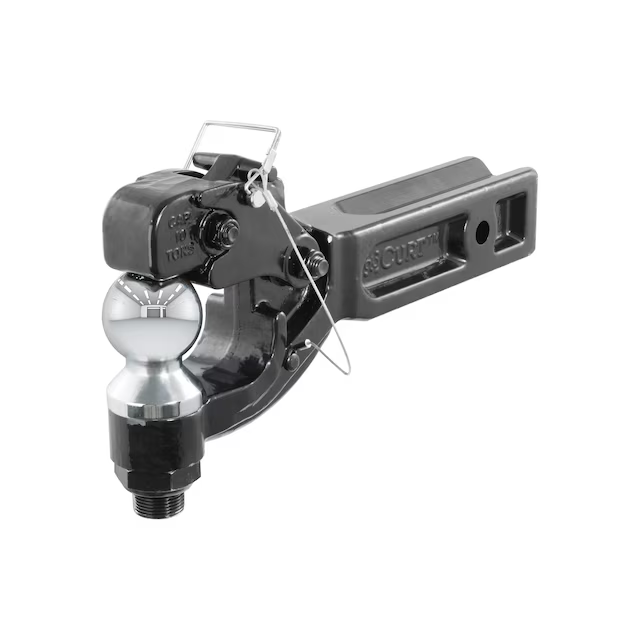
A pintle hitch is a heavy-duty towing system made up of two parts:
- A pintle hook mounted to the tow vehicle
- A lunette ring attached to the trailer tongue
Instead of resting on a ball, the lunette ring drops into the pintle hook and locks in place. This design allows for more movement and much higher weight capacity than a standard ball hitch.

Why Use a Pintle Hitch?
Pintle hitches are all about strength and durability. They’re commonly used when:
- Hauling very heavy loads
- Towing on rough or uneven terrain
- Using commercial or industrial trailers
Some key benefits:
- Higher weight ratings than most ball hitches
- More articulation, which helps on bumpy roads or job sites
- Extremely durable and long-lasting
Pintle Hitch vs. Ball Hitch
While ball hitches are more common for everyday towing, they’re not always the best option for heavy-duty jobs.
Here’s a quick comparison:
- Pintle Hitch
- Best for construction, farming, and industrial hauling
- Louder and rougher ride
- Handles heavier weights

- Ball Hitch
- Smoother, quieter towing
- Ideal for light to medium loads
- More common for personal use

If you’re towing equipment, dump trailers, or military-style trailers, a pintle hitch is often the safer choice.
Are Pintle Hitches Safe?
Yes, when used correctly. Because of their higher tolerance for movement, pintle hitches can feel noisier or less smooth, but they’re extremely secure. Just make sure:
- The hitch and lunette ring are rated for the load
- The locking mechanism is fully closed
- Safety chains are properly attached
Do You Need a Pintle Hitch?
You might want a pintle hitch if:
- Your trailer already has a lunette ring
- You’re hauling heavy equipment or materials
- You frequently tow on job sites, gravel roads, or uneven ground
If you’re renting or borrowing a trailer, always check the coupler type before hooking up—pintle and ball hitches are not interchangeable.
Final Thoughts
A pintle hitch isn’t for everyone, but when it’s the right tool, it’s hard to beat. Built tough, designed for heavy loads, and trusted in demanding environments, it’s a solid choice for serious towing jobs.
Whether you’re hauling equipment for work or renting a heavy-duty trailer, understanding how a pintle hitch works can help you tow safer and smarter.