 By
By Renting a trailer can make a project, move, event, or weekend trip a whole lot easier. But before you book, it is important to make sure the trailer you are renting actually fits what you need.
A trailer may look like the right option in photos, but the trailer specs tell the full story. Details like payload capacity, deck size, hitch size, brakes, ramps, winch, and tie-down points can make a big difference in how safe and simple your rental experience feels.
Whether you are hauling a vehicle, moving equipment, picking up furniture, cleaning out a property, or transporting materials, here are the trailer specs to check before you book.

Payload Capacity
Payload capacity tells you how much weight the trailer can safely carry. This is one of the most important specs to check before renting.
For example, if you are hauling a car, tractor, side-by-side, construction materials, or debris, you need to know the trailer can handle the weight of your load. It is also important to remember that the total weight may be more than you think once you add tools, fuel, attachments, gear, or extra materials.
If you are not sure, message the host before booking. Share what you plan to haul and ask if the trailer is a good fit.
Trailer Size and Deck Space
Trailer size matters just as much as weight capacity. A trailer may be able to carry the weight, but it still needs to have enough room for the item you are hauling.
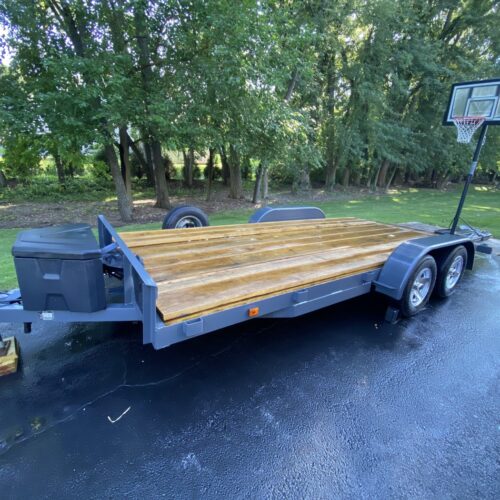
Check the trailer’s length, width, and usable deck space. If you are hauling a vehicle, make sure the wheelbase and tire width will fit. If you are hauling equipment or furniture, make sure there is enough space to load everything safely without stacking or squeezing items in a way that could cause damage.
This is especially important for car haulers, enclosed trailers, utility trailers, and equipment trailers.
Hitch Size
Before pickup, confirm the hitch or ball size required for the trailer. Common ball sizes include 2-inch and 2 5/16-inch, but every trailer can be different.
Showing up with the wrong hitch setup can delay your rental or prevent you from towing the trailer altogether. You should also make sure your tow vehicle is rated to pull the combined weight of the trailer and your load.
A quick message to the host can help you confirm the correct setup before you arrive.
Trailer Brakes
Some trailers have brakes, and some do not. For heavier loads, trailer brakes can be very important.
If the trailer has brakes, you may need a 7-way connector and a brake controller in your tow vehicle. Before booking, check whether the trailer has brakes and make sure your vehicle is set up to use them.
This is especially important when hauling cars, heavy equipment, livestock, or large loads.
Connector Type
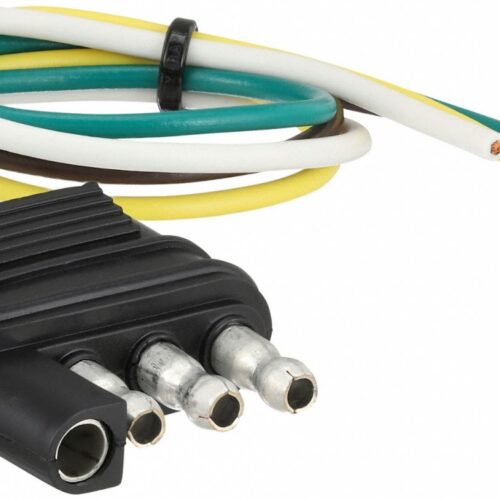
Trailer lights and brakes connect to your tow vehicle through a wiring plug. Common options include 4-way and 7-way connectors.
A 4-way connector usually controls basic lights, like brake lights and turn signals. A 7-way connector can support additional functions, including trailer brakes.
Before booking, confirm the connector type so you know whether your vehicle is ready or if you need an adapter.
Ramps and Loading Setup
If you are loading a vehicle, mower, ATV, side-by-side, tractor, or equipment, ramps matter.
Check whether the trailer includes ramps, how long they are, and whether they are built-in, slide-out, fold-up, or detachable. Longer ramps can make loading easier, especially for low-clearance vehicles or equipment.
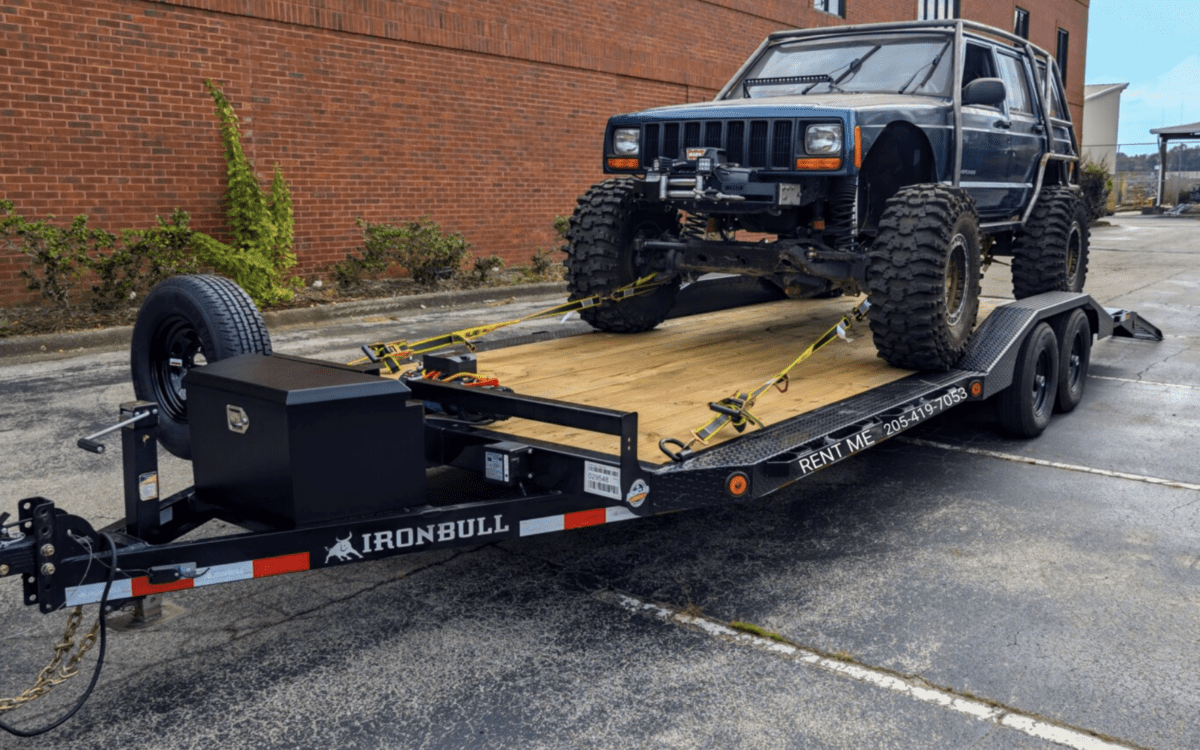
If you are renting a car hauler, ask whether the trailer works well for your specific vehicle. Low cars, wide tires, or long wheelbases may need a different loading setup than a standard vehicle.

Winch
A winch can be a major help if you are loading a vehicle or equipment that does not run, is difficult to drive onto the trailer, or needs extra control during loading.
Before booking, check whether the trailer has a winch and whether it is included with the rental. You may also want to ask if it is electric or manual and if any additional equipment is needed to use it.
A winch is not always necessary, but when you need one, it can make a huge difference.

Tie-Down Points
Tie-down points are what allow you to safely secure your load. Depending on what you are hauling, you may need D-rings, stake pockets, rails, E-track, or other anchor points.
Before booking, look at the photos and description to see where the tie-down points are located. If you are hauling a vehicle, equipment, or anything that could shift during transport, ask the host what tie-down options are available.
You should also confirm whether straps, chains, or binders are included or if you need to bring your own.

Tires and General Condition
Before leaving with a trailer rental, take a few minutes to look at the tires and general condition of the trailer.
Check for worn tread, low tire pressure, visible cracks, missing lights, damaged ramps, loose boards, or anything that looks unsafe. You should also ask whether the trailer has a spare tire.
This does not have to be complicated. A quick walkaround before pickup can help catch small issues before they turn into bigger problems on the road.

Enclosed Trailer Details
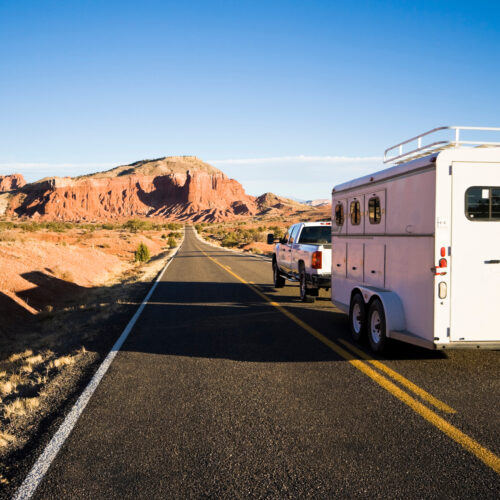
If you are renting an enclosed trailer, there are a few extra specs to consider.
Check the interior height, door opening size, ramp door or barn door setup, tie-down options, and whether the trailer is weatherproof enough for what you are hauling.
This matters if you are moving furniture, motorcycles, tools, inventory, or anything that needs protection from weather.

Dump Trailer Details
If you are renting a dump trailer, check the bed size, payload capacity, side height, ramp setup, gate style, and whether the trailer has a tarp.
Dump trailers are useful for yard cleanup, debris removal, mulch, gravel, and jobsite materials, but the specs can vary a lot. A trailer with taller sides may be better for bulky debris, while ramps may matter if you need to load equipment.

Use the Chat Feature Before You Book
One of the easiest ways to avoid confusion is to ask questions before your rental starts.
When renting through towlos, you can use the chat feature to message the host directly. This gives you a chance to confirm the details that matter most for your rental, including payload capacity, hitch size, connector type, brakes, ramps, winch, tie-down points, and any included accessories.
You can also tell the host what you are planning to haul and ask if their trailer is the right fit. Most hosts know their trailer well and can help you feel more confident before booking.
Final Thoughts
Trailer specs may not be the most exciting part of booking a rental, but they are one of the most important. The right trailer can make your project easier, safer, and more efficient. The wrong trailer can create delays, frustration, or towing issues.
Before you book, take a few minutes to review the specs, look closely at the photos, and message the host with any questions. Confirm the payload capacity, trailer size, hitch setup, brakes, connector type, ramps, winch, tie-down points, and any equipment you may need to bring.
A little preparation before booking can make the entire rental experience smoother from pickup to drop-off.
Find trailer rentals near you on towlos and use the chat feature to ask your host questions before you book.