 By
By Whether you’re hauling a car, furniture, landscaping equipment, or weekend toys, how you load your trailer matters just as much as what you’re hauling. Weight distribution is one of the biggest factors in keeping your tow smooth, safe, and stress-free, but it’s something a lot of people overlook.
Here’s a simple breakdown of what trailer weight distribution actually is, why it’s so important, and how to do it the right way.
New to trailer rentals? Watch our quick guide

Why the Distribution of Weight Matters
Poor distribution can turn a normal tow into a shaky, swaying nightmare. When weight isn’t balanced properly, your trailer can:
- Sway or fishtail
- Push down too hard on your hitch
- Lift the back of your vehicle
- Reduce braking control
- Wear out your tires and suspension faster
Good distribution = better stability, better control, and a much safer towing experience.
Understanding Tongue Weight (the #1 Mistake)
Tongue weight is the downward force the trailer puts on your tow vehicle’s hitch. Most people overload the back of the trailer or don’t load enough weight onto the tongue, both create dangerous problems.
The golden rule: 👉 Tongue weight should be 10–15% of your trailer’s total loaded weight.
Too little = sway. Too much = your tow vehicle squats and steering gets sketchy.
How to Achieve Proper Weight Distribution on Your Trailer
1. Put 60% of the weight toward the front
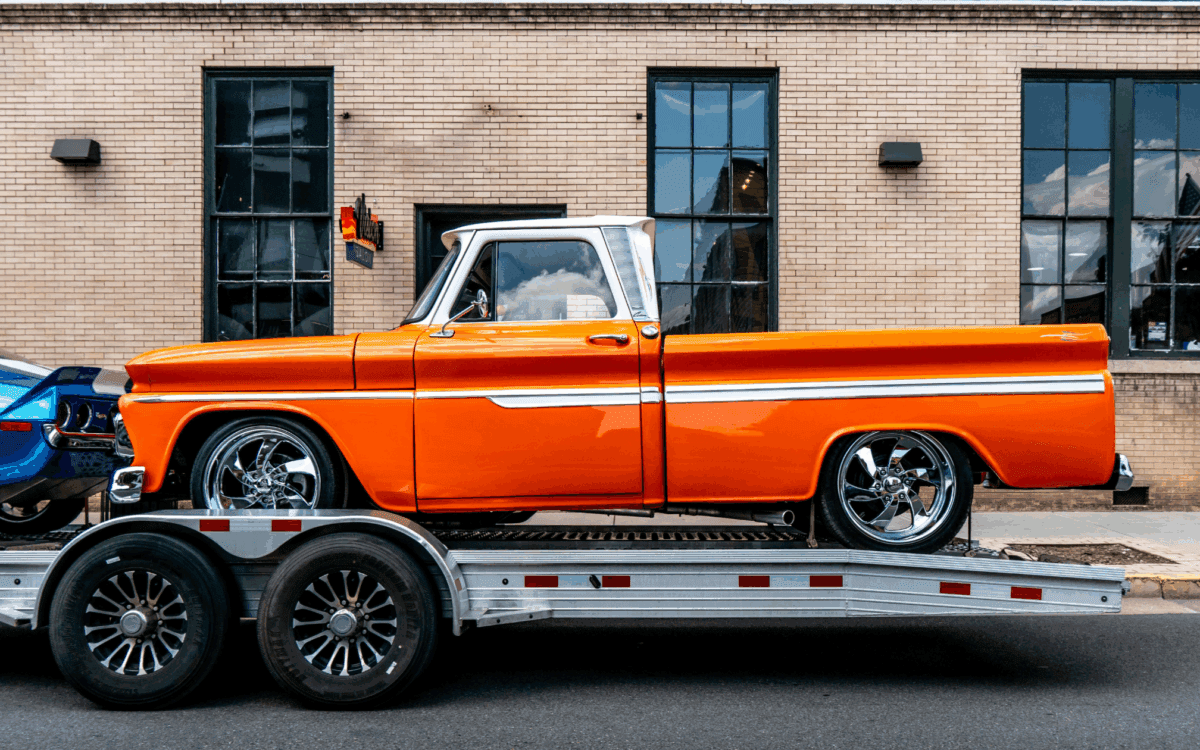
This means heavier items should sit just slightly forward of the axle(s). This placement helps achieve optimal distribution and that perfect tongue-weight sweet spot.
2. Center the weight left to right
If one side is heavier than the other, the trailer can lean, bounce, or sway. Balanced weight side-to-side is crucial for stability.
3. Secure everything (seriously, don’t skip this)
Strap it down tight. Use multiple tie-downs. Cross your straps when possible. A loaded trailer becomes dangerous if anything shifts mid-tow, ruining your carefully planned distribution.
4. Keep the load low
Heavy items should sit low to the ground. Stacking weight high raises the center of gravity and can cause tipping and sway, negating good weight distribution practices.
Signs Your Trailer Weight Distribution Is Wrong
You might need to readjust your weight distribution if you notice:
- Your trailer sways above 45 mph
- The back of your tow vehicle is squatting
- Steering feels light
- The trailer bounces over bumps more than usual
- Your headlights are pointing at the sky
If something feels off, pull over and reposition your load.
When You Need a Weight Distribution Hitch
If you’re hauling a heavier load, a longer trailer, or towing with a half-ton truck or SUV, a weight distribution hitch can help keep everything level and stable.
You might need a distribution hitch if:
- Your trailer is over 5,000 lbs
- The rear of your tow vehicle sags
- You feel sway or reduced steering control
- You’re driving long distances
A weight distribution hitch redistributes tongue weight across all axles of your tow vehicle and trailer, improving overall towing stability.

Final Tips Before Hitting the Road
- Double-check your tire pressure (tow vehicle + trailer)
- Make sure your load is strapped down tight
- Check your lights, brake controller, and chains
- Take the first few miles slow to feel how your load affects the tow
Remember: Proper distribution of weight is the foundation of safe trailer towing. Take the time to load correctly, and you’ll enjoy a smoother, safer journey every time.